
Housing First, Seven Years Later
A disabled mother, Portland’s Housing First experiment, and what happens when policy meets reality
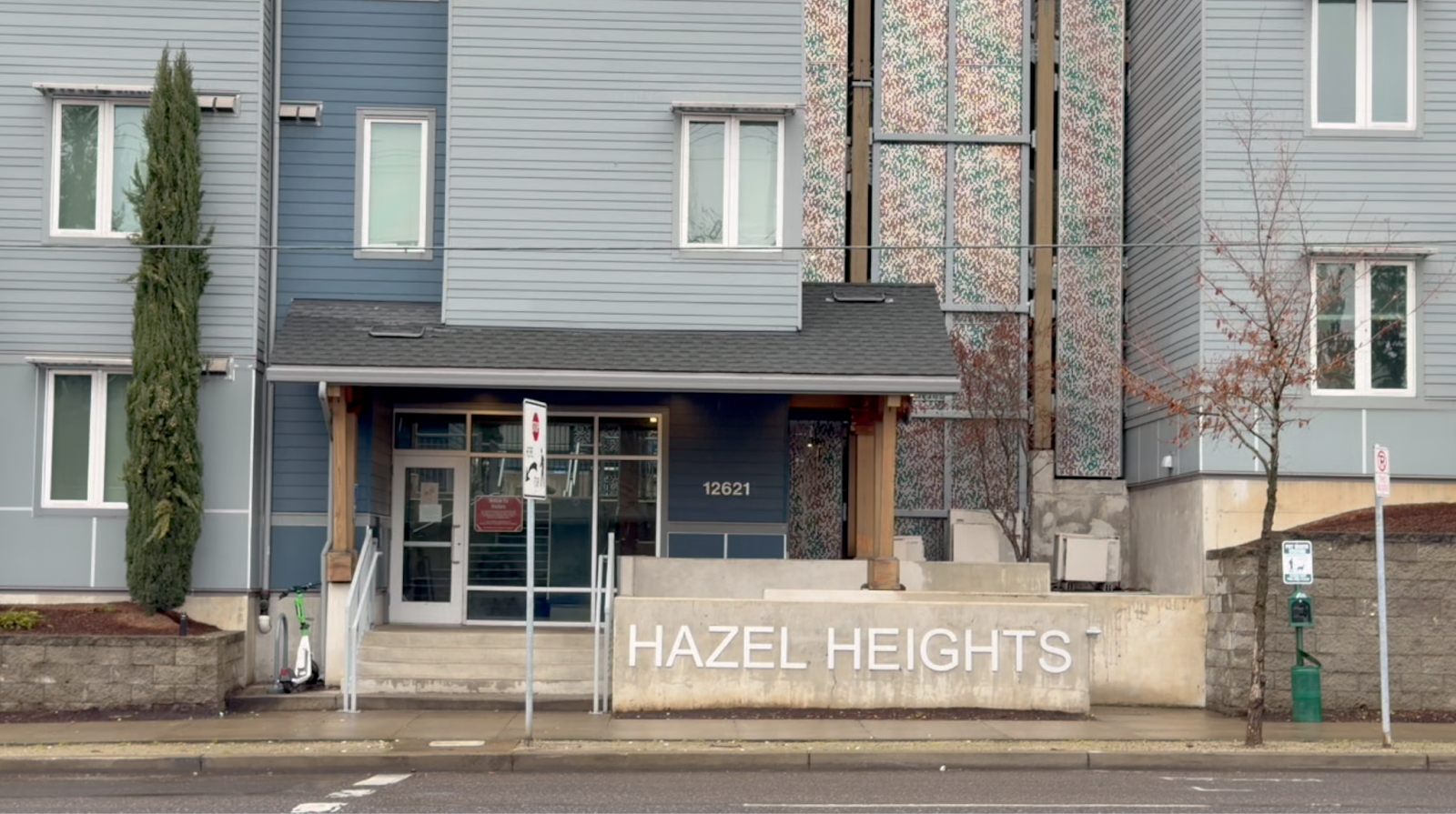
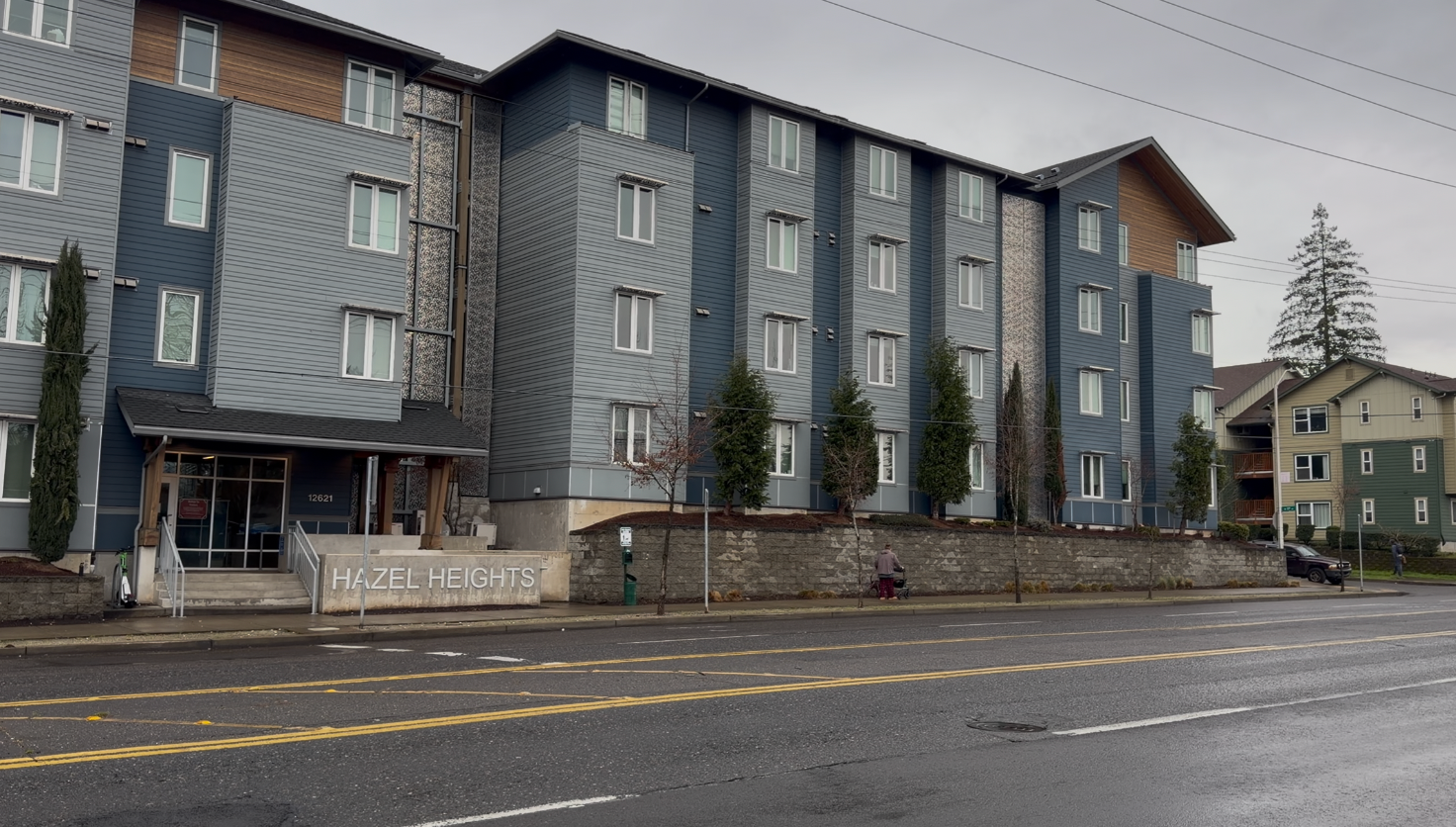
When Hazel Heights opened in 2018 in Portland’s Hazelwood neighborhood, it was part of the city’s expansion of permanent supportive housing under a “housing first” framework. The approach, adopted widely across the United States, rests on a central premise: people exiting homelessness should be offered stable housing without preconditions such as sobriety or treatment for drug or alcohol addiction, with services provided voluntarily rather than required. Proponents argue that housing stability is the foundation for recovery and public safety.
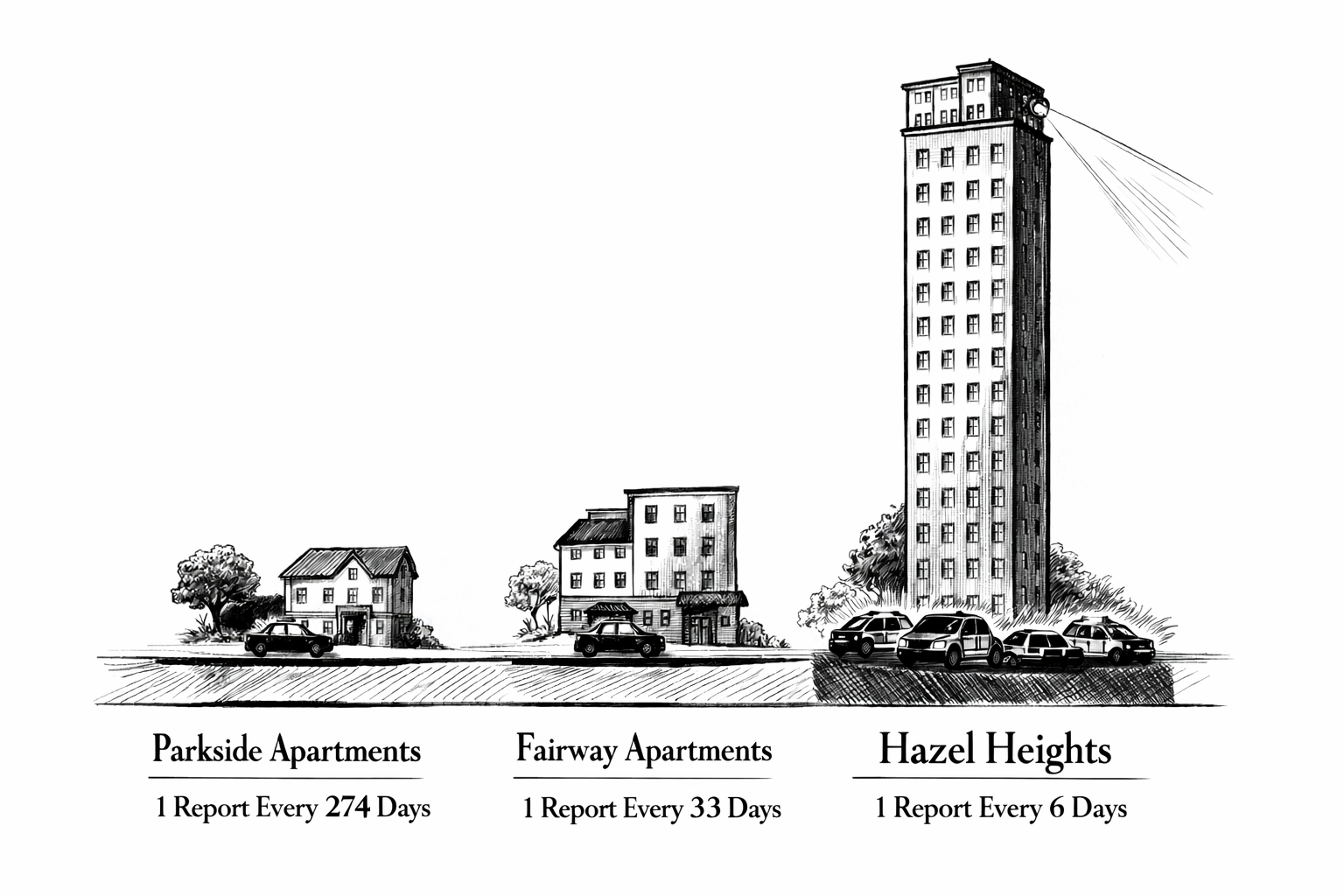
According to records obtained by oceanplot, approximately 403 Portland Police reports were associated with the Hazel Heights address between 2019 and December 2025, averaging roughly one report every six days. A nearby market-rate complex generated just eight reports over the same seven-year period.
For one resident, a disabled mother raising a teenage daughter, the building didn’t represent stability. Hazel Heights became the site of repeated violent incidents, unresolved police responses, and what she describes as years of living in a state of constant vigilance.
Watch the full report.
The resident agreed to speak on the condition that her name not be published. She said she fears retaliation from neighbors and potential housing consequences for speaking publicly. Public records reviewed by oceanplot include internal reports acknowledging that some residents at the property are reluctant to report safety issues due to fear of retaliation.
“I used to think if I stayed inside, I was safe,” she said.
Her story begins well before this building.

She grew up working. By thirteen she was cleaning a downtown Portland hair salon and buying her own school clothes. By fourteen she was paying rent. She built a career in construction and welding and ran five miles a day. She loved going to the gym and staying active.
Then she began having seizures.
An emergency room initially dismissed her symptoms as heartburn. She was sent home while actively having a stroke.
Within days she underwent emergency brain surgery. She had to relearn how to walk, eat, and speak. During recovery, her partner of twenty-one years left. She applied for disability benefits, a process that would take years. Without income, she became homeless with her thirteen-year-old daughter.
“I don’t think people understand what happens when you become disabled overnight,” she said. “Nobody gives you a handbook.”
Shelters were full. Waiting lists stretched indefinitely. Then an option emerged: she could access housing quickly — but only if she claimed to be an addict.
Under Portland’s housing first model at the time, she said there were rooms available for addicts in so-called “wet housing,” where drug abuse was tolerated on site.
“If you said you were disabled with a minor daughter, you couldn’t get housing,” she said. “If you said you were an addict, you could.”
She didn’t abuse drugs or alcohol. So she lied. She memorized a clean date. And she entered sober housing, later transferring into Hazel Heights shortly after it opened.
⸻
What Housing First Promised
Hazel Heights operates under Housing First principles promoted nationally by the U.S. Department of Housing and Urban Development and adopted locally through Multnomah County’s Housing Forward initiative. The premise is straightforward: housing should not be contingent on sobriety. Stable shelter is viewed as the foundation from which recovery and case management can occur.
In practice, this means residents cannot be evicted solely for drug or alcohol use. Services are offered but not mandatory. The model has reportedly shown strong research support for increasing housing retention among chronically homeless adults.
However, the model does not eliminate addiction. It houses people who may still be actively using.
She says she did not fully grasp what that meant when she moved in.
“I thought it would be like any apartment. You don’t know if your neighbor drinks. What’s the difference?” she said. “I didn’t understand what a wet building really meant.”
Within months, she began documenting incidents. Before long, the resident had experienced a serious safety incident roughly every three weeks.
How does a harm-reduction housing model function when families with minors share the same walls?
⸻
Early Warning Signs
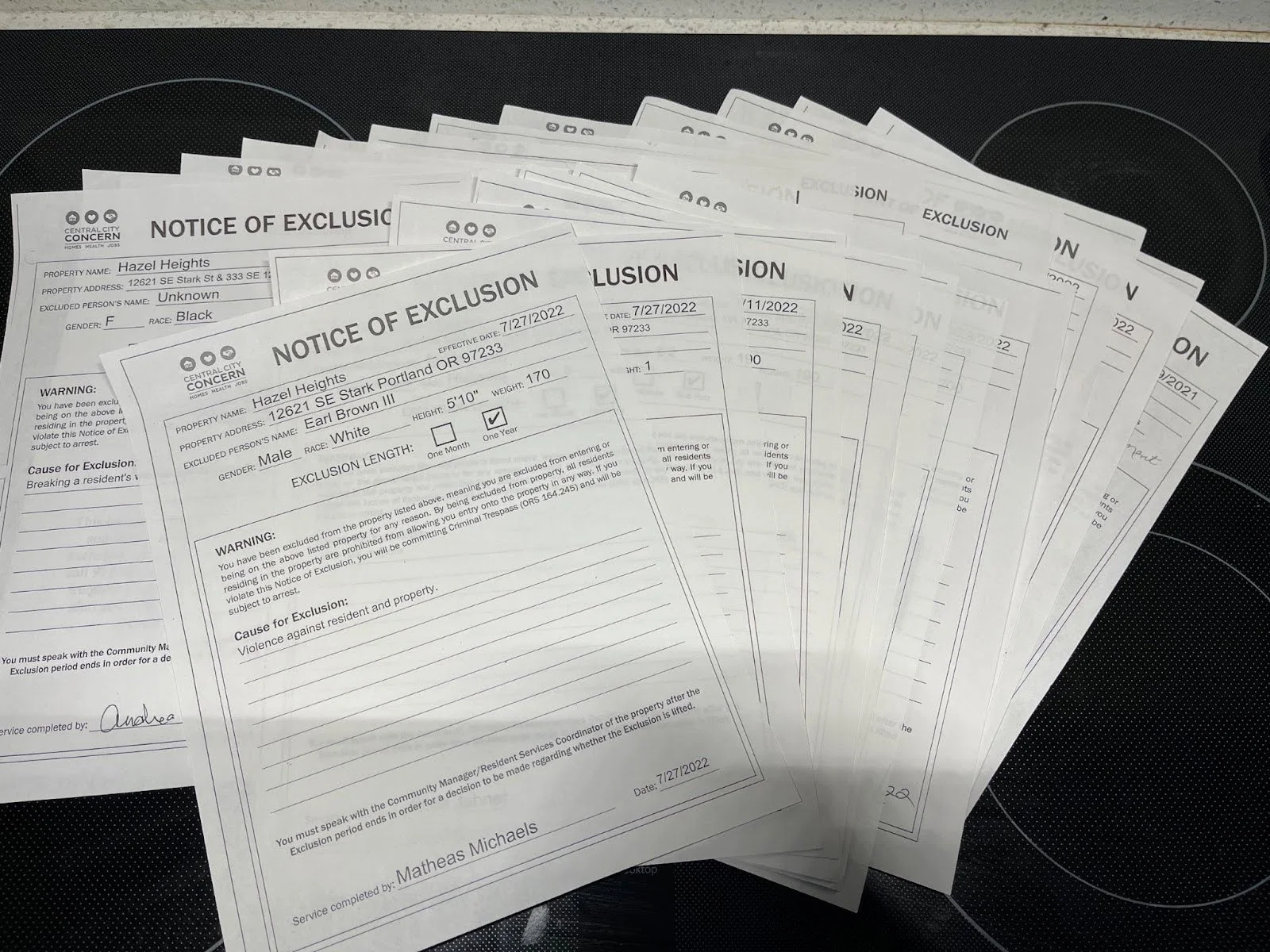
Parking was the first conflict. Roughly 150 units share fewer than 40 parking spaces. Unable to walk well while recovering from her stroke, she eventually obtained an ADA-designated spot due to her medical condition. That required documentation from her doctor. She alleges that staff disclosed her medical information to other residents and that it was posted in a building Facebook group. People regularly took her parking spot, and staff eventually gave her a direct line to a towing company — leaving the liability of enforcement to the resident.
She describes early encounters with open drug dealing and escalating disturbances. Her daughter once picked up what turned out to be a bag containing multiple smaller bags of methamphetamine. The resident turned it in to the police.
Then came gunfire, actual violence.
During one of the first major shootings, she and her daughter heard rapid bursts outside their windows. When she stepped outside, she saw a car riddled with bullet holes. She believes the intended target had been dealing drugs from the vehicle.
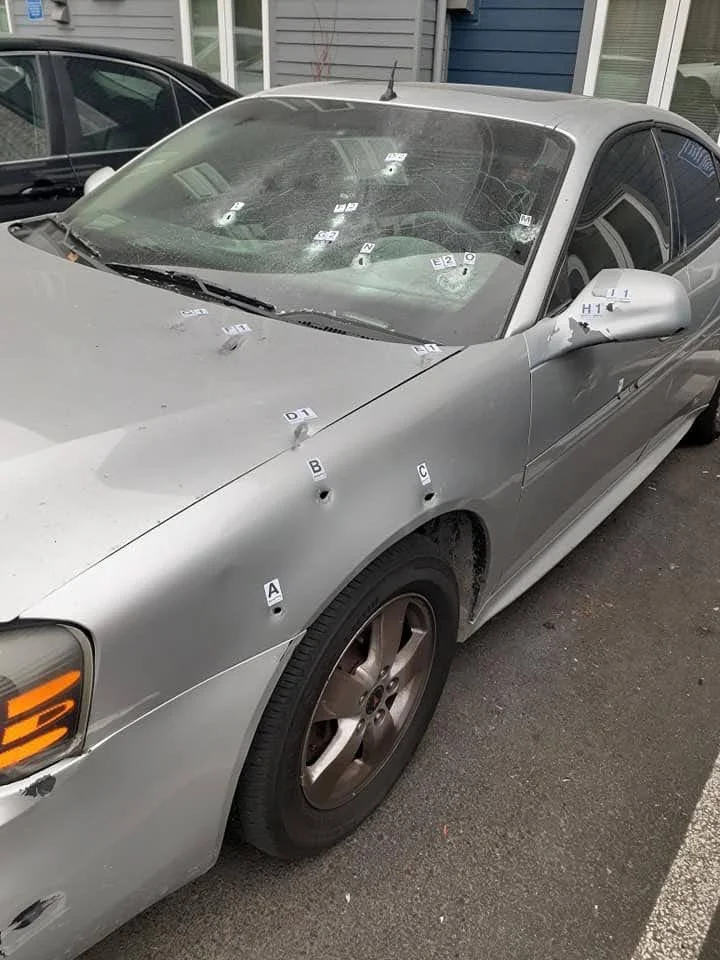
“These weren’t one or two shots,” she said. “It was unloaded, a whole clip.”
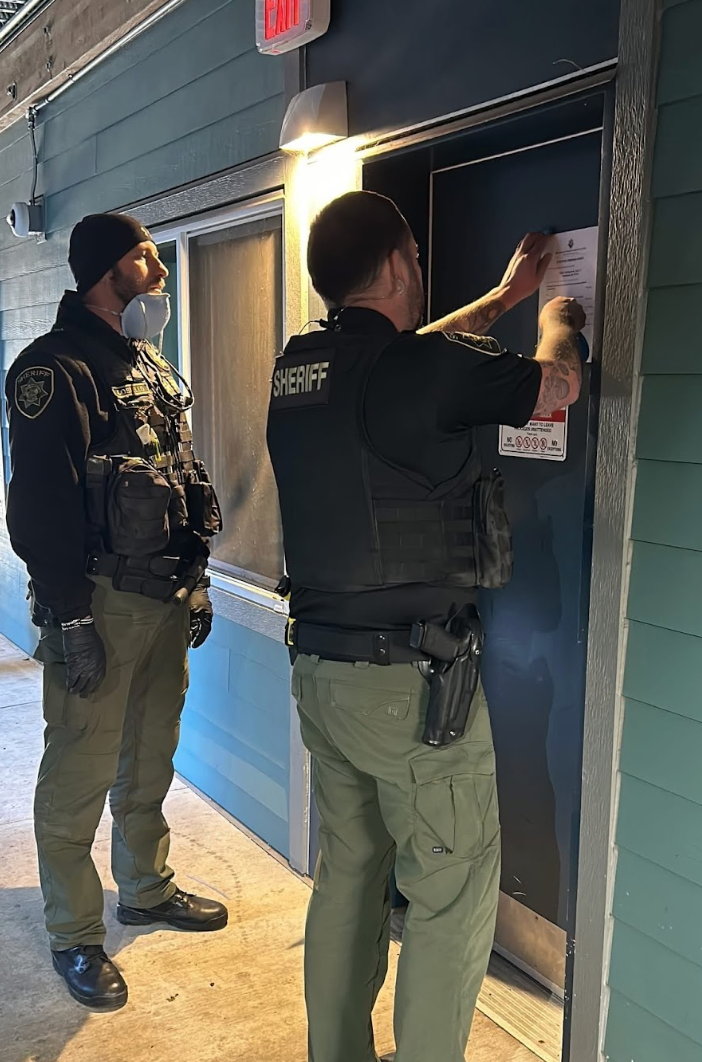
Over time, she describes multiple shootings, stabbings, and violent assaults in or around the complex, including a homicide as recently as December 2025.
⸻
Violence at the Door
One neighbor, whom she describes as heavily intoxicated and later using methamphetamine, began screaming threats at her through shared walls. At one point he dragged a couch in front of her front door and shouted, “I’m going to kill you,” for hours at night.
Her daughter’s school, hearing the threats during remote learning, contacted Child Protective Services.
“They thought he lived with us,” she said. “CPS came to check on me.”
She repeatedly reported him to management. She says she was told eviction was restricted during COVID moratoriums. Eventually, when he was removed for other reasons, management subpoenaed her to testify in his eviction proceedings, using the notes she had kept documenting his behavior as evidence.
“That just put a target on my back,” she said, rubbing her hands together gently.
⸻
A Gun to the Head
The most direct confrontation occurred over her ADA parking spot. After waiting hours for a tow truck to remove an unauthorized vehicle, a man emerged and pointed a gun at her head, warning her never to touch his car
Her daughter’s boyfriend called the police.
“They didn’t come,” she said.
She describes similar non-responses after reporting a bullet hole in her apartment and assisting a stabbed neighbor who ran into her unit seeking help.
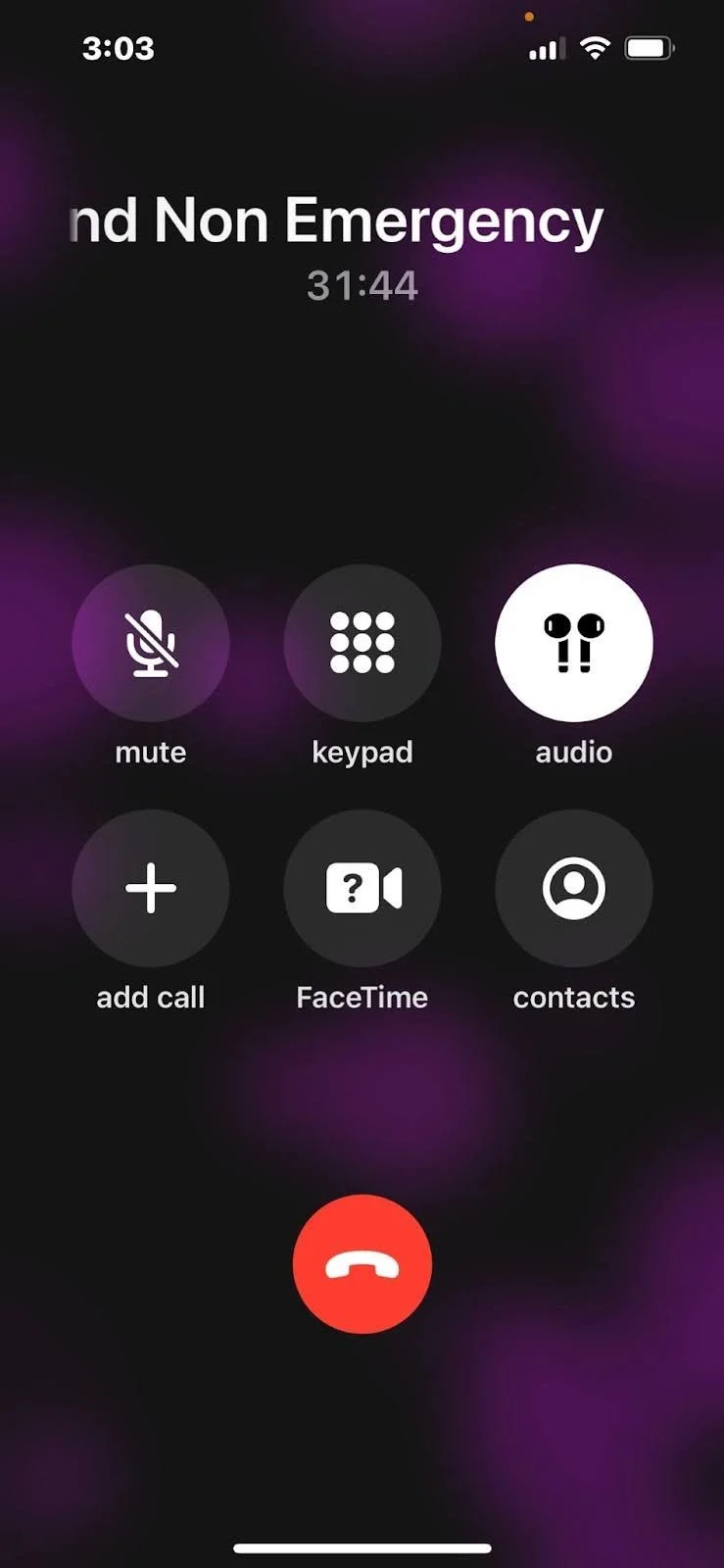
“I waited on hold for hours,” she said of non-emergency calls. “Nobody answered.”
⸻
The Data
Police records obtained by oceanplot show hundreds of police reports tied to the address since the building opened. Records show approximately 403 police reports associated with Hazel Heights since 2019, averaging roughly one report every six days. Another income-restricted apartment nearby, less than a mile away, generated 66 police reports. Over the same period, a market-rate apartment complex generated 8 police reports total.
For this comparison, oceanplot requested and reviewed police report data from 2019 through December 2025 for two nearby apartment complexes, one income-restricted and one market-rate, using the same address-based request method submitted to the Portland Police Bureau. The time ranges were matched, and comparisons between reported crimes were observed. The comparison properties were selected based on proximity, market, and unit scale.
The difference is stark — and structural.
At Hazel Heights, reports of crimes appear with regular frequency in the data. Police records show multiple aggravated assaults and simple assaults, burglary and vehicle theft cases, vandalism, restraining order violations, fraud reports, shooting investigations, and death investigations. Several incidents resulted in felony arrests.
Yet over nearly seven years, about 84% of reports resulted in no arrest. More than three quarters ended without a clear enforcement or prosecution path.
These resolution rates are notably lower compared to comparison properties and represent a mere fraction of the total number of incidents.
Statistics alone don't capture the total context. Many supportive housing properties experience elevated call volume due to the vulnerability of their populations. However, when combined with resident testimony and internal reporting acknowledging on-site drug activity and safety concerns, the pattern raises questions about management capacity and enforcement boundaries within housing first environments in Portland.
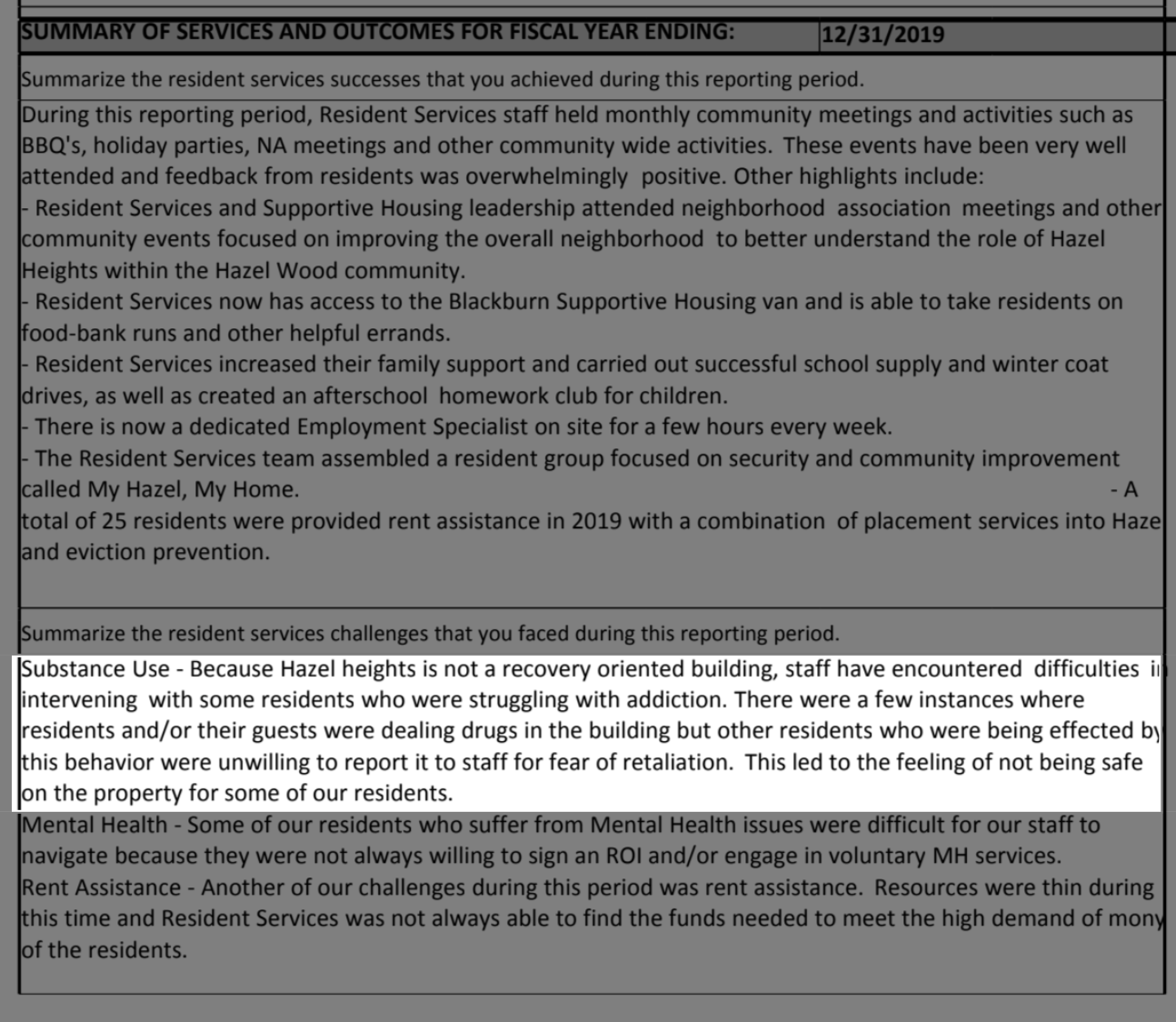
Records obtained from the Portland Housing Bureau show that Central City Concern’s own required reporting acknowledged on-site drug dealing and resident safety concerns.
In a 2019 resident services narrative, management noted that some residents were unwilling to report incidents “for fear of retaliation.” The same reports reference meetings with Portland Police Bureau East Precinct officers to strategize safety improvements and, at times, the hiring of overnight security following shootings and other violent incidents.
But residents say those security deployments were temporary and short-lived.
Central City Concern, which operates Hazel Heights, and the Portland Housing Bureau were contacted for comment regarding police activity at the property, resident safety concerns, and enforcement policies under Housing First.
Portland Housing Bureau said its oversight of Hazel Heights is limited to financial and affordability compliance through an annual reporting process known as Annual Compliance Testing. PHB said safety concerns are not tied to funding benchmarks and that the bureau does not conduct separate safety audits of the property. It described itself as a gap lender in affordable housing development and said supportive housing outcomes and service delivery are primarily overseen by county departments.
Central City Concern did not respond to requests for comment by publication time.
⸻
Living in Fight or Flight
The psychological toll, she says, is constant.
“It’s always fight or flight,” she said. “Once the bullet came through, I knew I wasn’t safe even inside.”
Her daughter has been diagnosed with PTSD. She avoids leaving the apartment. “Inside still feels safe to her,” she said. “I’m trying to make the outside safe so the inside can be safe.”
She has been on transfer lists since 2019. Without Section 8 portability, moving between subsidized properties is limited by availability. She must also remain near her medical providers due to ongoing neurological issues and medical trauma.
⸻
Policy Collision
Housing First was designed to end chronic homelessness among adults with complex needs.
It was not specifically designed as family housing. Yet in practice, families, children, disabled residents, active users, and individuals with violent or sexual assault histories may coexist within the same buildings. And functionally, the law treats them all the same.
City officials say safety oversight is distributed across agencies, with PHB focused on affordability compliance while supportive housing services are overseen by Multnomah County. Nationally, HUD’s Housing First framework requires that housing be offered without preconditions such as sobriety and does not mandate child-specific safety standards within Permanent Supportive Housing properties.
Decisions about placement, supervision, and on-site safety practices are largely delegated to local governments and nonprofit operators.
The resident estimates that at any given time, roughly half a dozen units in the building are occupied by families with underage children. She says she has witnessed Child Protective Services remove children from the property on multiple occasions. These removals were not reviewed case by case for this report, and CPS does not publicly disclose the reasons for child removal.
But the presence of minors in a harm-reduction housing environment raises unresolved questions about how the city balances addiction services with child safety.
That reality creates real lived tension.
“Kids should come first,” she said. “If this is family housing, make it safe for families.”
She is not calling for mass eviction. She is asking whether concentrated addiction environments are compatible with vulnerable families living in the same space.
⸻
Why She Still Speaks
Despite fear of retaliation, she reached out for this story.
“I still have hope,” she said. “If people knew where their money was going, they would care.”
She imagines a building designed intentionally for single parents and children, with secure courtyards, playgrounds, and stable oversight. During our interview, she became emotional reflecting on what her daughter had been through.
Her story doesn’t invalidate housing first as a model, and she never claims it does. But it complicates it. It forces a question that Portland policymakers can’t really ignore: What safeguards exist when harm reduction, housing, and family stability intersect in the same building? Who is looking out for this family?
Hazel Heights opened just under a decade ago with a promise of stability in Portland.
“Housing is health,” the campaign said at the time.
But since 2019, the address has generated a police report roughly every six days. For this mother raising a child inside, stability never really lasted that long.
⸻